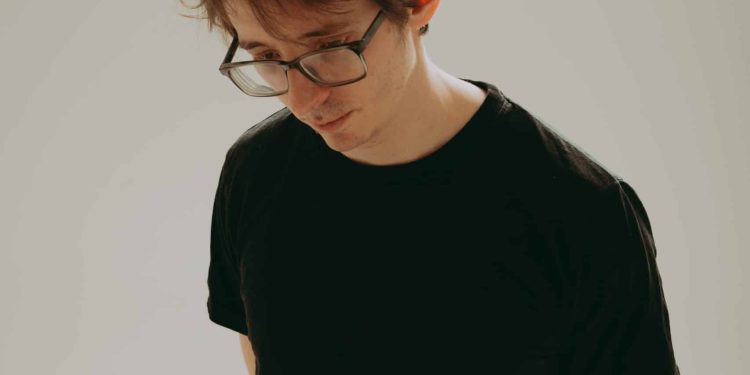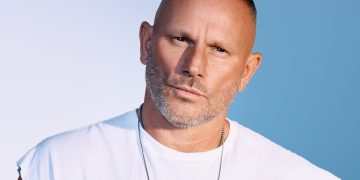



During Hispanic Heritage Month, DYNAMIQO took time to reflect on his journey, values, and community that continue to shape his career.
Born in México and raised in Southern California, Hector Beltran, better known as DYNAMIQO, has spent more than twenty years building a career that spans festivals, sports arenas, and international tours, all while proudly representing his heritage. As Latin music continues its global rise, few artists have had a front-row seat to the movement like him.
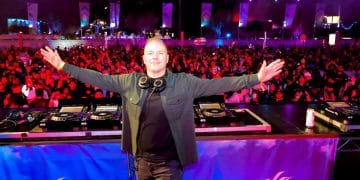
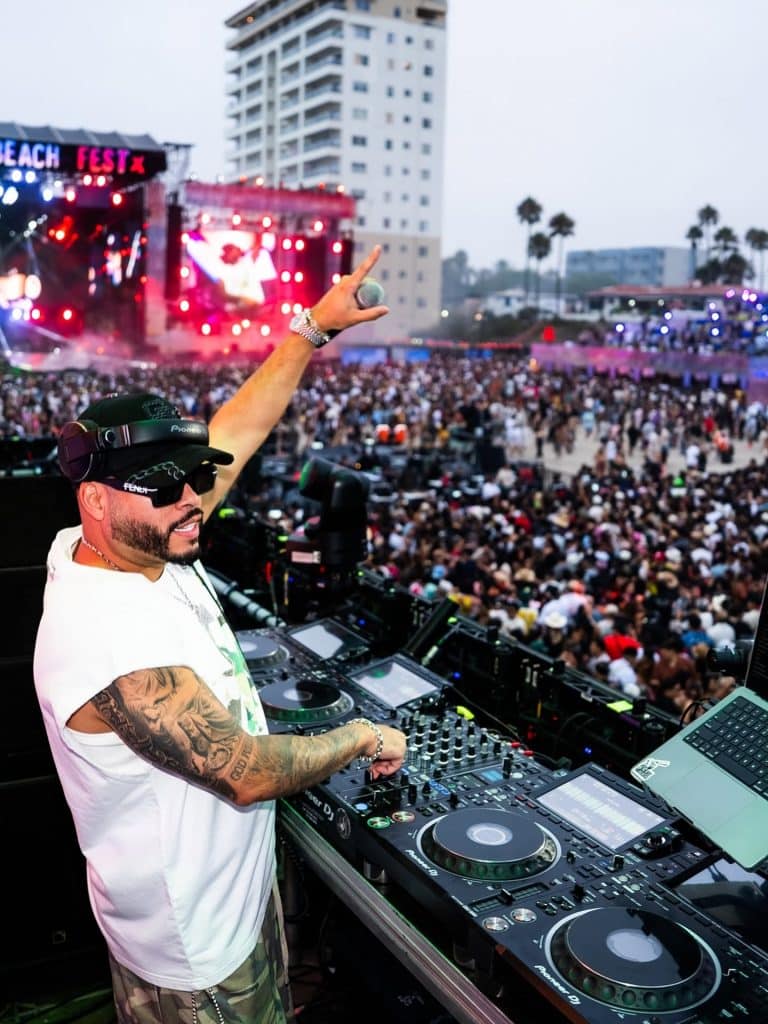
DYNAMIQO is the official tour DJ for Fuerza Regida, giving him a front-row seat to how música regional, or regional Mexican music, has gained popularity globally. Beyond the tour circuit, this DJ has brought his signature blend of hip-hop, Latin music, and EDM to major stages like Baja Beach Fest, the FIFA World Cup in Qatar in 2022, and MLS, where he serves as the official in-game DJ for San Diego FC.
Now, during Hispanic Heritage Month, DYNAMIQO is reflecting on the responsibility of cultural representation, his journey to this point, and the community that supported him along the way, while looking ahead to an exciting new chapter as an artist, producer, and creative visionary.
Hi DYNAMIQO, thanks for chatting with us today. You’ve been DJing for more than 20 years, and you’ve been dominating charts, festivals, and stages throughout your career, including serving as Fuerza Regida’s DJ. Throughout those years, what changes have you witnessed in the music industry, especially when it comes to the embrace of Latin music?
I think the biggest change I’ve seen is in the music. The music has evolved. It’s changed. I remember in my early years, a lot of it was pop and Top 40 stuff. Then EDM took over. Now we are in a place where Latin music, regional Mexican music, reggaetón, and Latin urban music are kind of dominating. I would say the music is what’s really changed over the last 20 years of my journey as a DJ more than anything.
Do you remember a specific moment when you realized Latin music had crossed into mainstream recognition?
Yes. I remember in 2018, I had a conversation with a friend and I said, ‘You know what? I feel like this Latin bubble is going to burst.’ I thought, I’m going to really focus on the Latin wave because that’s the lane I want to take. I grew up listening to reggaetón, regional music, and Spanish music in general.
That year, “Te Bote” was out by Bad Bunny, Daddy Yankee had “Despacito,” and J Balvin dropped “Mi Gente.” Then, Beyoncé got on a remix, Justin Bieber got on “Despacito,” and I was like, “Okay, we’ve got something here.” That was 2018, and that’s when I started throwing my own Latin parties. That’s when I really committed to the Latin wave, the Latin movement, and that lane.
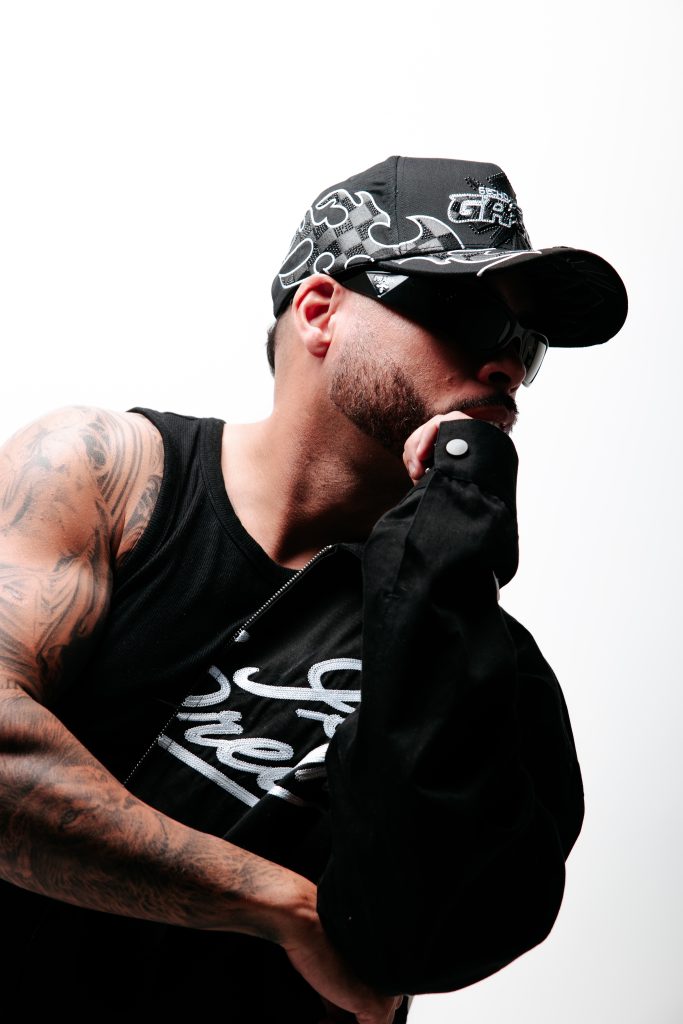
Since we’re celebrating Hispanic Heritage Month, how have your Mexican roots shaped both your music and the relationships you’ve built in the music industry?
For me, culture comes first. Culture and community are the most important things. I’m a very authentic person, and I love partnering and working with people who also celebrate culture and community. I think it’s important. Es nuestra gente. Es nuestra raza. It’s important that we keep pushing the culture forward. Not just when we are popping off or dominating the world or the charts, but always.
I remember when I first moved to San Diego and started DJing in the nightlife scene. I was told, Don’t play any Latin music. Don’t play any cumbia. Definitely don’t play cumbia. I always said, I’m still going to do my thing. If they don’t like me, they don’t have to book me. A lot of venues still booked me. My culture is number one. I always have to represent our people. It’s a beautiful culture that we celebrate, and we live, and we have to keep pushing it forward.
It’s gone so much farther than just here in America; other countries around the world are loving this music now too. Has that worldwide growth inspired you to collaborate with artists outside of the Latin community?
Yes, perfect question. I went to Colombia and DJed a festival there a few years ago. I got there a day early and went out on some tourist vibes. They were playing a lot of regional Mexican music in bars and restaurants, and everywhere I went, I realized regional (Mexican) music is huge in Medellín.
So yes, I’d love to bring together a fusion of Colombia and Mexico and collab on reggaeton and regional music. Colombia thrives in reggaetón. We thrive in regional Mexican music. I’d love to bring those two worlds together.
Has the way you build your sets changed since you first started?
I treat my DJ sets like a show, like a performance. In my early years, you downloaded the hottest trending music, and before, it was just a DJ set. Now it’s on a whole other level. I just got back from Las Vegas. I had five shows there this weekend. Everything from the music to my intro to the visuals to my team. I have my manager, stage manager, and media team; now it’s on a whole other level. I make a lot of edits and remixes. I custom-make every intro. Every show gets a brand-new intro because I treat my performances like a complete production. That’s truly what it is.
You’re currently working on an album. How has that process differed from building DJ sets?
We’re hoping to release a single by the fourth quarter of the year, and an album in 2027. We’ll be under Street Mob Records in collaboration with World Politon Records. It’s definitely different. There’s a little bit of pressure because you’re dealing with multiple artists, producers, engineers, and writers. Everybody has different schedules.
At the same time, I’m a full-time dad, touring with Fuerza Regida, and doing my own shows. It’s a balance. But we’ve been doing this for 20 years. Hopefully we’ve got another 20 years to come, this time with DYNAMIQO as an artist, producer, and creator. We’re working on an album right now. I’m excited to share it with the world.
Are there any sounds from your cultural background that you’re planning to incorporate into EDM or would like to hear more of?
One hundred percent. Cumbia. One hundred percent cumbia. Corridos. Banda. A bunch of the music I grew up listening to in the ’90s. I was born in 1988, so I grew up in that era listening to my grandma’s and my mom’s music. At six o’clock in the morning, they’re making breakfast, cleaning the house, and all that music is playing.
All that music I’d love to bring into the EDM world and create Latin EDM, Latin house, Latin tech, Latin Afro, everything I grew up on as a kid in Mexicali and Brawley, and even now living in San Diego. At the same time, Reggaeton has been a huge part of my life. I’d love to bring that, which you’re already hearing a little bit of right now, but I want to bring my own flavor, my own sauce, my own style to it.
At the end of the day, EDM is global. You go to an EDM show or festival, and the energy is on another level. House music was actually the first genre I ever played. When I started my journey as a DJ in 2006, I played vinyl records that were ’80s and ’90s house music. So I have a very special place for house music and dance music; it is very important to me.
Do you ever feel pressure to represent your culture, or does it come naturally?
It comes naturally. It comes organically. I don’t feel pressure. I don’t feel stress. It happens organically and naturally. I love that I am able to naturally and organically push it forward. It’s just who I am. I’m sure some people feel that pressure, but no matter what’s going on in the world, I’m always going to push forward for our people, our culture, and nuestra raza.
A documentary on your career is in the works. What has it been like revisiting the last 20 years of your life?
It’s been amazing. We went to Mexicali a few weeks ago. We shot in Mexicali and Brawley. We interviewed family members and close friends. We’ve also been filming on the road with Fuerza Regida. We shot this weekend in Vegas. Everything has happened really fast. It all came together within the last six to eight weeks.
My main objective is to inspire people. That’s the only reason I’m making this documentary. There have been no bumps in the road, and that’s how I know it is meant to be. It has happened naturally. I was talking with my manager about how this summer marked my 20-year anniversary as a DJ. The next thing you know, we decided to make a documentary, and a week later we’re filming. I’m excited to tell my story, share my journey, and most importantly inspire people.
Looking back on your journey, what part of your legacy are you most proud of?
The journey itself. Trusting the process. Being patient. Waiting for my moment. Seizing every opportunity. Taking every meeting. Those things got me to where I am now, 20 years into my DJ career. But honestly, the thing I’m most proud of is my family and my daughters. They’re what motivate me. They keep me balanced. They keep me disciplined. They keep me working hard. That’s the part of my legacy I’ll always be most proud of.
Finally, are there any genres or influences that you haven’t fully explored yet that you’d like to dive deeper into in the future?
Definitely EDM. I started as a DJ playing dance music. I think it’s time to bring my dynamic flow and energy into EDM. I want to combine everything I’ve learned from working with Fuerza Regida, my Street Mob family, and all the relationships I built throughout more than a decade touring with reggaetón artists.
Also hip-hop, since I also grew up as a hip-hop head in the ’90s and ’00s. I want to blend hip-hop, Latin music, and EDM together. Music is the universal language. What’s more beautiful than bringing cultures together through music and fusing them together like a perfect marriage?