



Trinkets, while fun, are adding to America’s overconsumption and waste crisis. Are you part of the issue?
From mini resin ducks to the surge in popularity of “sprouts,” trinket culture has evolved from thoughtful gifts to mass-produced, plastic items that litter the dancefloor at the close of the night. While these gestures of PLUR might spark joy in the moment, the majority of them don’t serve a clear purpose in day-to-day life, leaving them destined for the landfill.
Trading trinkets has become an integral way to bring the rave community together, but raving shouldn’t contribute to a larger issue of overconsumption and waste generation. With many of our favorite festivals taking place in picturesque escapes, it’s time we start thinking about how we can protect these beautiful places by rethinking our purchases and being more intentional about gifting.
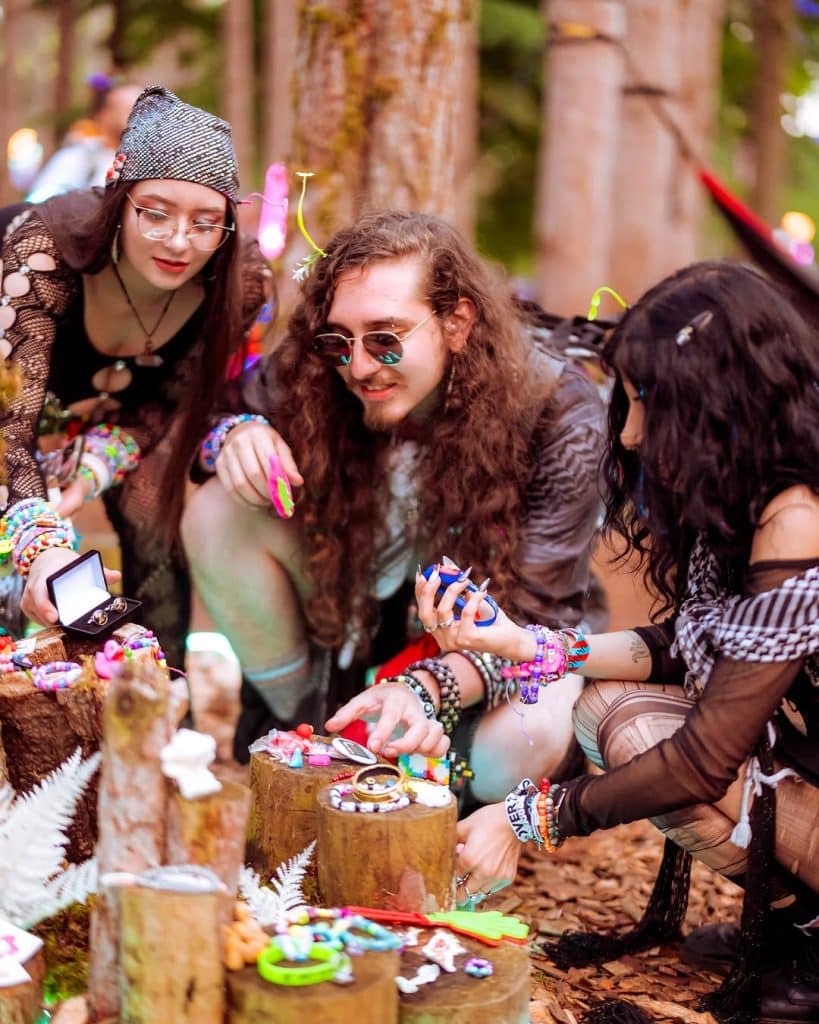
Here’s why your trinkets are trash.
There are plenty of times I’ve been grooving to a set, and someone hands me a tiny animal figurine about as big as a fingernail. While I appreciate the sentiment, I always think, “What am I supposed to do with this?” I end up stuffing the trinket in a pocket of my hydropack, only to find later that it has disappeared, likely lost to the abyss of crushed cans and various pieces of garbage strewn across the ground.
In 2025, Elements Festival recycled and composted over 44 thousand pounds of trash. An additional 1,457 pounds were able to be donated, but only 15.64% of the total waste from the festival was diverted from landfills. Let that sink in.
Items like rubber ducks, squishy animals, glow sticks, and plastic fidget toys can’t even be recycled. These are the items that usually don’t make it home in the bag of the receiver, but end up left behind — either disposed of, lost, or broken.
The lifespan of cheaply made items purchased in bulk from retailers like Amazon and Shein are lower than that of something handmade — and, frankly, they hold less value. With little thought given to the environmental impact of the single-use trinkets they’re pumping out, these mass-produced items are unethically sourced and also significant contributors to landfills due to their low-cost materials.
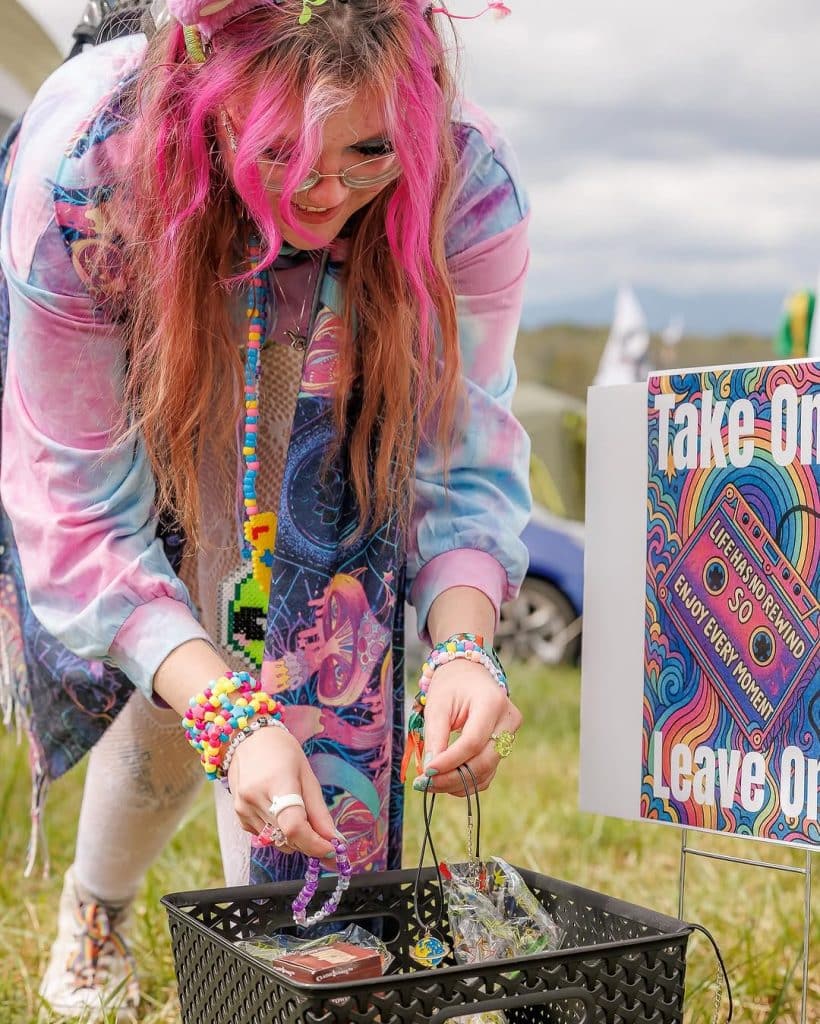
There are a million ways to put sustainability first while continuing the culture of festival trinkets and gifts.
When constructing my “take one, leave one” station for Seven Stars Festival, I set to only bring items that were handmade or could be repurposed. In the weeks leading up to the event, I cranked out bag charms, keychains, painted mini canvases, personalized hair clips, and stunning sun catcher hat pins in preparation. While these items included plastic beads and charms, the handmade creations didn’t risk the same future as single-use items that serve no purpose.
Looking to create gifts that would be cherished for years to come, Jesse T. from Pennsylvania borrowed inspiration from his childhood. Drawing on his affinity for collecting various cards, he designed his own G Jones trading cards. Artist trading cards have become incredibly popular over the last few years with the explosion of FestiCards and Psyde Quest. The perfect memento from a festival, these cards are true collectibles.
While you can change the way you trade trinkets, the items you may receive in return might not always be in line with putting the environment first. Repurposing items and curating trinkets displays is a great way to keep special items from going to waste.
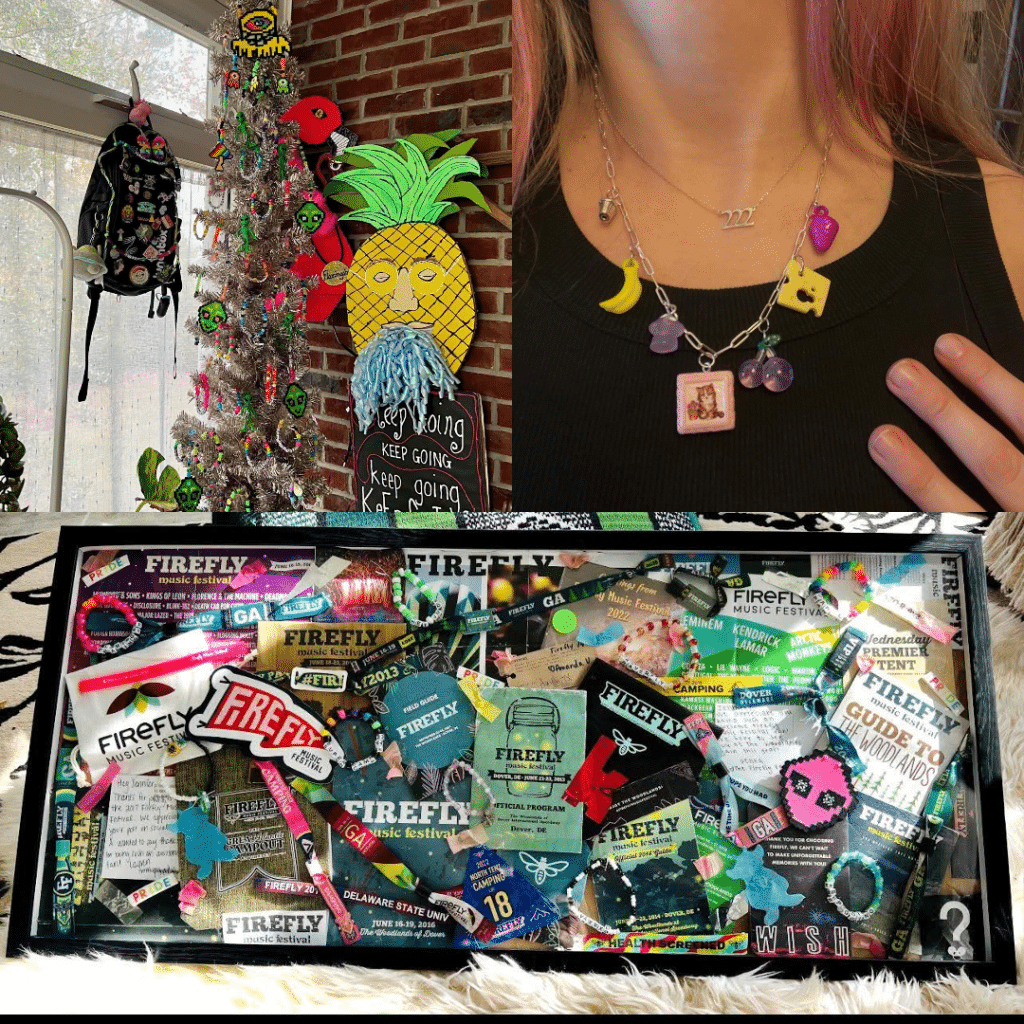
Paulina A. from Massachusetts has gotten crafty and started fashioning trinket necklaces for fun. Taking the tiniest items in your trinket trove and turning them into charms allows them to live on in a new and functional way as one-of-a-kind jewelry pieces.
Another way to repurpose your favorite trinkets is by creating shadow boxes or other artistic displays. Jennifer S. from North Carolina brings her love of festivals into her home decor through carefully curated displays of her favorite events, including the now-defunct Firefly Festival. During the holiday season, her kandi tree covered in singles and perlers delivers the whimsy of raving as she awaits the return of festival season.
You may think I’m ungrateful for saying the trinkets you hand out are garbage — but if you’re triggered, you might be part of the problem.
The rave scene is rooted heavily in DIY culture. From handmade fashion statements to curated underground raves, it’s wild to think that a movement that once fought commercialism is now falling into the trap of overconsumption from mass retailers.
These uninspired gifts are playing a part in a much bigger problem. Not only are you spending your hard-earned money on bulk items that were likely produced in factories with poor labor conditions, but you’re adding to the growing amount of non-recyclable items that are plaguing our precious planet.
Our community is quick to complain about the rise in massive weather events that have rained out festivals. Meanwhile, we could be using these events as a reason to reflect on our consumption habits and take action to mitigate our contribution to climate change.
As you prepare for this year’s festival season, I urge you to rethink your purchases. If it’s not something you would personally hold onto beyond the weekend, it’s not worth adding to your cart. With a little creativity, your next trinket trade can be thoughtful, meaningful, and possibly blossom into a fantastic new hobby — without adding to the problem.