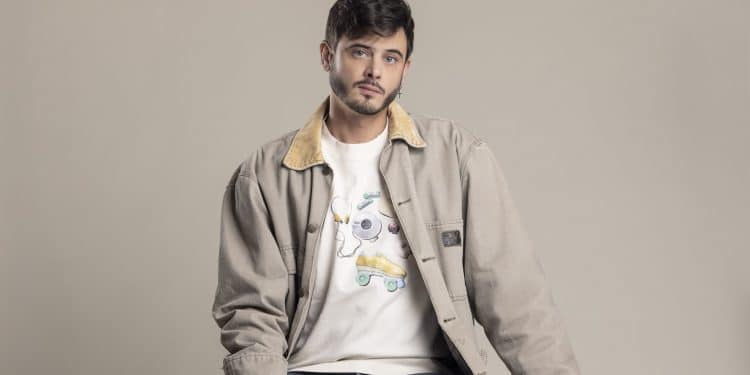



We caught up with London house DJ and producer Ozzie Guven to discuss his influences and what’s next for his evolving sound.
London underground house music talent Ozzie Guven has risen to become a sought-after UK artists. His musical journey is defined by ambition, relentless creativity, and deep passion.
Starting on the piano at a young age, Ozzie soon discovered his spark in the raw energy of ’90s sounds, drawing inspiration from iconic trailblazers such as Wiley, Dizzee Rascal, MJ Cole, and Shy FX. Over the years, his focused hard work and dedication have allowed him to develop a distinctive sonic identity, one that sets him apart with a style uniquely his own.
Eventually, Ozzie’s output became impossible to ignore. Industry veterans like Marco Carola, Michael Bibi, and The Martinez Brothers were among the first to champion his tracks, weaving them into sets on major stages worldwide. His breakthrough came during lockdown in 2021, when his Dubaholics EP climbed to #1 on Beatport‘s Minimal/Deep Tech Tracks chart.
Building on that momentum, Ozzie has continued to maintain a strong presence, with recent releases including the high-energy Move Yo Body EP, his hit single “Give Me The Music,” and a string of standout remixes.
A steady fixture in the UK underground, Ozzie is highly sought after at revered venues and festivals including fabric, Warehouse Project, Off Sonar, and After Caposile. Known for his high-octane sets that erupt the dancefloor, he closed out the end of the year with a highly anticipated Christmas Boiler Room set in Cambridge, not to mention packed shows in Birmingham and Glasgow.
In our exclusive interview, we sat down with Ozzie to discuss his musical journey, creative proccess, and what lies ahead. Read on for an inside look at one of the UK’s most exciting rising artists.
Growing up in South East London, your musical journey began with learning piano. How did that foundation influence your approach to producing electronic music, and what drew you into this world?
Growing up in South East London definitely shaped everything for me. Learning piano first gave me a real grounding in melody, harmony, and structure, which still plays a big role in how I approach electronic music today. Even when I’m making something that’s quite club focused or minimal, there’s usually a musical idea underneath it all. What pulled me into electronic music was the freedom, the fact that you could take traditional musical knowledge and all your inspiration and then bend it into your own sound.
Your music is deeply inspired by the UK’s underground scene and ’90s culture. How do you balance honoring the sounds that shaped you with creating something fresh and unique?
London’s rave culture and the UK underground are in my DNA. The ’90s scene especially had this rawness and sense of community that I’m always chasing in my music. For me, it’s about capturing that feeling rather than copying specific sounds. I try to respect where it all came from — the grooves, the attitude, the energy — but then push it forward with modern production techniques and my own perspective. If it feels honest, that balance usually comes naturally.
Your tracks have received support from artists like Marco Carola, The Martinez Brothers, and Michael Bibi. What was it like hearing some of the biggest names in house music play your tracks for the first time?
Hearing my tracks played by some of the bigger artists was surreal. You spend so much time alone in the studio, so when someone at that level connects with your music, it’s incredibly validating. The first time it happened, I remember being on my phone watching a clip back, thinking, “Wow, this is actually real.” It definitely gives you a boost of confidence and motivation to keep going.
Was there a particular moment when that support made you realize your music was connecting on a bigger level?
There wasn’t one single moment, but more a gradual realization. Seeing my tracks consistently appear in big sets, in big rooms, across different countries: that’s when it really hit me that the music was traveling further than I ever imagined. That’s a special feeling.
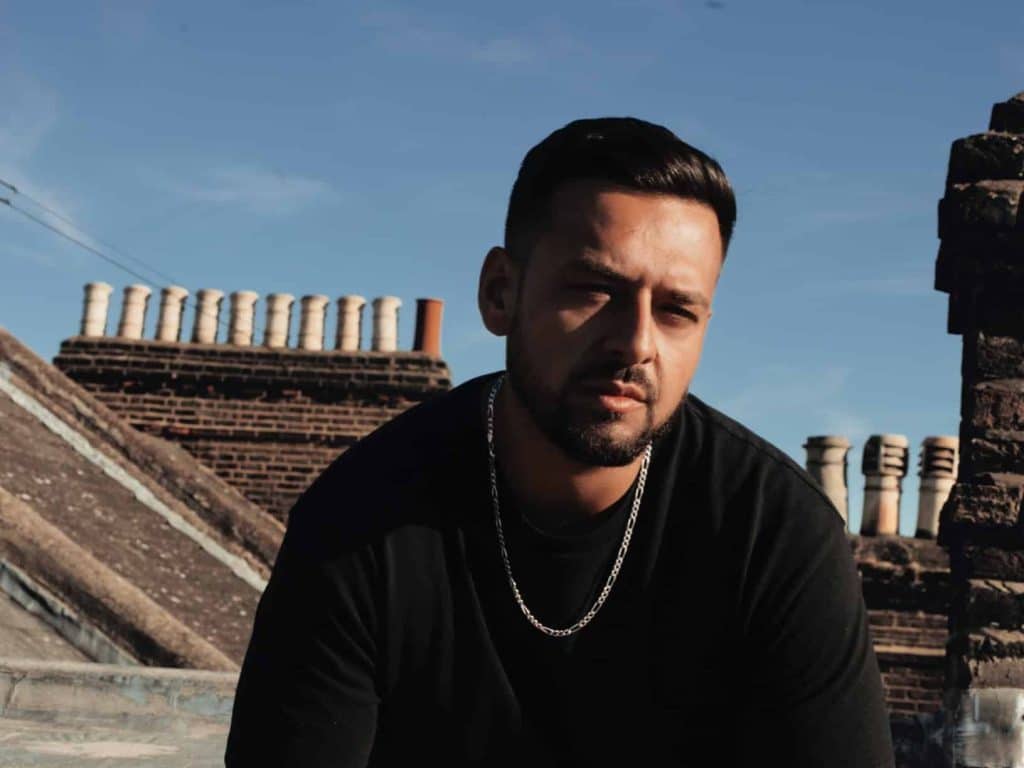
You’ve had a huge year performing at top-tier venues like fabric, Warehouse Project, Off Sonar, and After Caposile. Were there any particularly memorable or surprising moments from your 2025 performances?
2025 was massive for me. Playing places like fabric and Warehouse Project was something I’d dreamed about for years. Off Sonar and After Caposile were very special too, especially because of the international crowd and the energy they brought. Those shows definitely pushed me as a DJ.
When fans listen to your music, what do you hope they take away? Is there a particular message, vibe, or energy you aim to convey through your tracks?
When people listen to my music, I want them to feel something, whether that’s energy, release, or just getting lost in the groove. I’m always aiming for that moment on the dancefloor where everyone’s locked in together. There’s no big message as such, but I want the music to feel uplifting, raw, and real.
Looking ahead to 2026, with new releases and tour dates coming, what can fans expect from your upcoming music and shows?
Looking ahead to 2026, a lot is coming. New music that digs even deeper into my sound, but also experiments a bit more, and shows that reflect where I’m at creatively right now.
Follow Ozzie Guven:
Facebook | Instagram | SoundCloud | TikTok