
An interview with Levity’s lasershow designer and the co-owner of Florida-based EyeKandi Laser Productions.
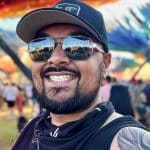
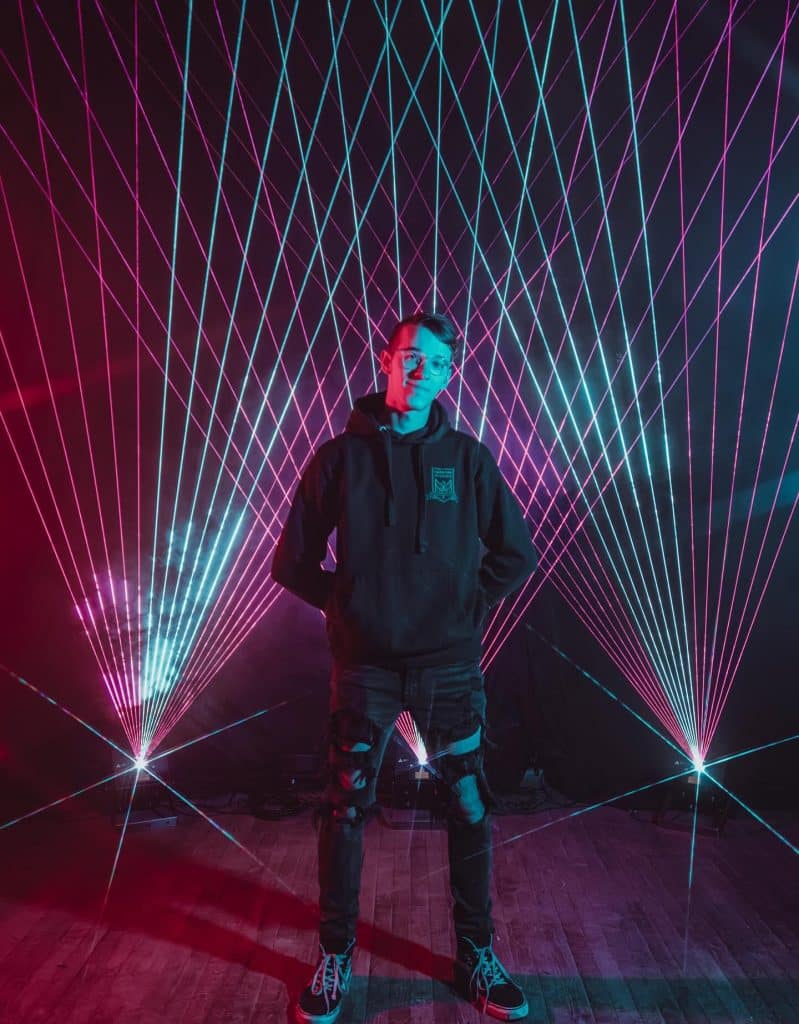
Corbin Sharpe dreams in laser and paints those visions with light.
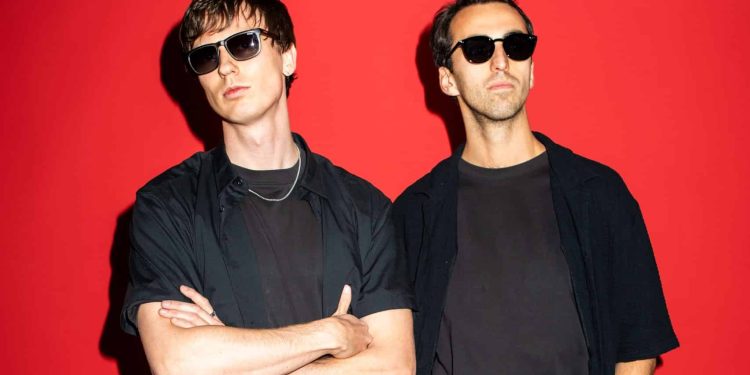
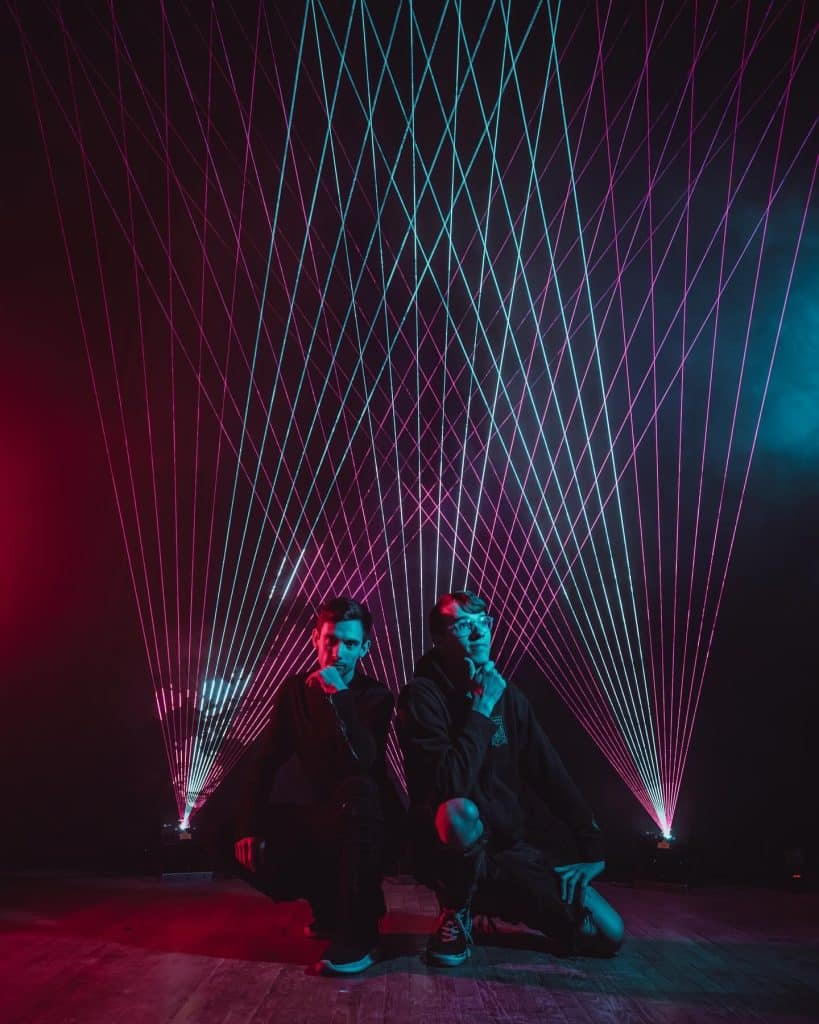
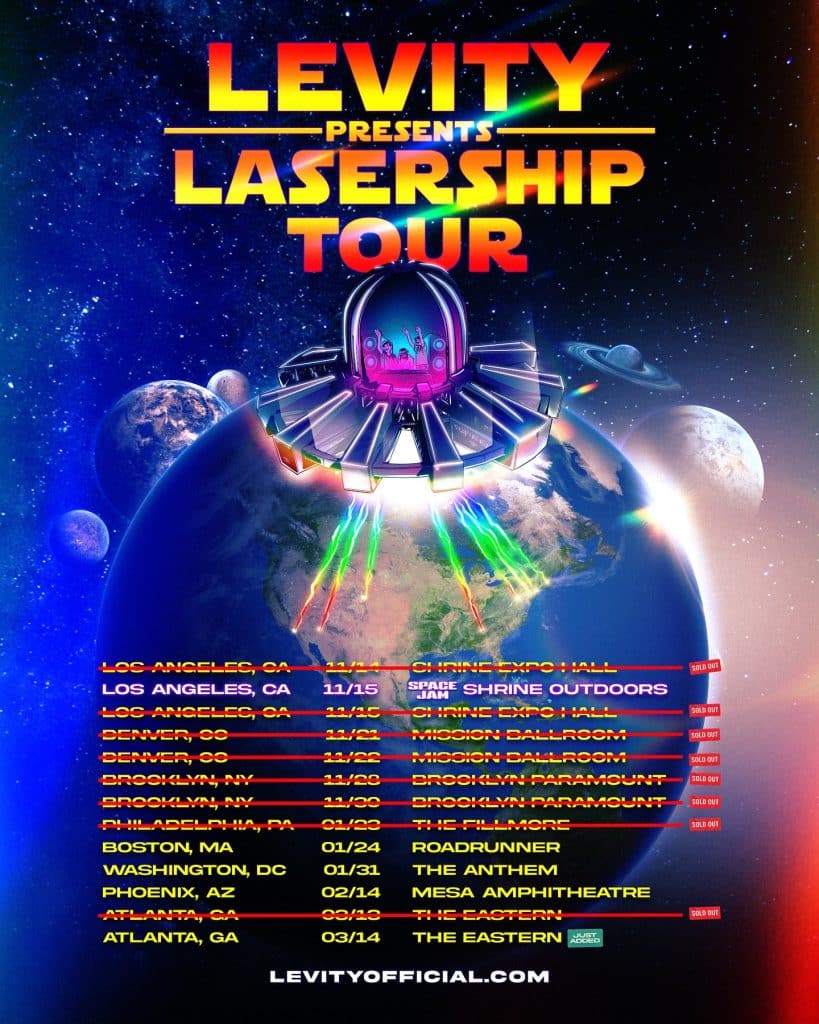
As lasershow designer for Levity and the co-owner of Florida’s EyeKandi Laser Productions, his expertise is on full display during the rising Chicago dubstep trio’s latest tour, LASERSHIP. The mind-blowing, 90-minute odyssey features a full-sized UFO, giant bursts of colored pyro, and about 80% of the firepower Gareth Emery packed into arenas for his LSR:CITY tour — all in venues about one-third the size.
It was my #1 concert of 2025, so I needed to know more about what goes into creating a show like LASERSHIP.
Below is my conversation with the 24-year-old Floridian, edited lightly for length and clarity. We discuss the tour, laser tech, and how to chase your dreams in the concert production industry.
Some people say all a DJ does up there is press play, and the people at the back are just running a computer program. What’s your response to that?
Oh my goodness. It is so much more than that. If people truly knew.
Let’s take Levity, for example. The guys have been working conceptually on this tour for almost a year. I first heard about it back in February, when we were doing the 360-degree Full Circle tour. That was the first point that they were talking about doing LASERSHIP and starting to brainstorm design ideas and really getting it in motion.
From the creative process, producing the music, and the new tracks they have for the tour to their involvement in the actual productions, they are so hands-on involved with their project in every capacity. It’s not just the DJ side of things.
I received most of the content about a month before the tour took off. I spent the better half of three weeks to a month programming the laser show side of things. And we’ve still been adding on portions. We’ve got the next leg coming up, starting January 23. I’ve been adding on new tracks, refining things, making the show better and better.
Tell me about EyeKandi. How long have you been a company?
I have a business partner, Scott Stevens, co-owner and lead project manager of EyeKandi. He owns another company, so he is not as full time as I am, but we work together. He keeps the business afloat. And I am sort of the driving force getting us sold onto gigs.
We started in July 2023. He was my best friend whom I met through flow arts, through the rave scene. I talked for years about wanting to do this, not really having the capital to make it happen. And he was like, “Hey, why don’t we start a business together? You seem dedicated to this.”
So he supported the dream fully and I’m so grateful to him for that because that was how we got our start. We got a tiny investment of lasers. We bought four little five-watt units, something you could fit in a club.
Where did this happen?
I grew up in a small town near Dayton, Ohio. We would do shows in Columbus and Cincinnati. One of our first shows was Stuca at Skully’s Music Diner in Columbus. We did shows at the Thompson House for a while. Just little things, really not making a lot of money. Maybe $100-300 a show for four lasers.
The biggest thing that actually propelled our business was we didn’t start out just doing shows and putting out show content. My business partner does photography on the side. So he owned a film studio that he rented. We had this area that we could record in, so we’d set up our lasers in there. We would design these timecode shows, record them, and post them on our Instagram.
We started out really early with the goal to appeal to artists, to design the creative side of what we do. While we do own a lot of lasers now — we have 20 lasers in our inventory, eight 40-watts, eight 20-watts, and four five-watts — that’s not our focus.
Our focus is to partner up with artists to curate their shows, to offer the best laser design that they can have. That’s always been our motto. We don’t want to be a big, competitive company. We want to be the best laser design company who also happens to have lasers that you can get from us.
How does one “dream in laser?”
Oh man, I like this question.
I used to do flow arts; I spin dragon staff. So I’m gonna relate it to this a little bit. When you’re a performer of any capacity, when you hear music, you don’t hear the sounds, you hear and see what your niche will look like.
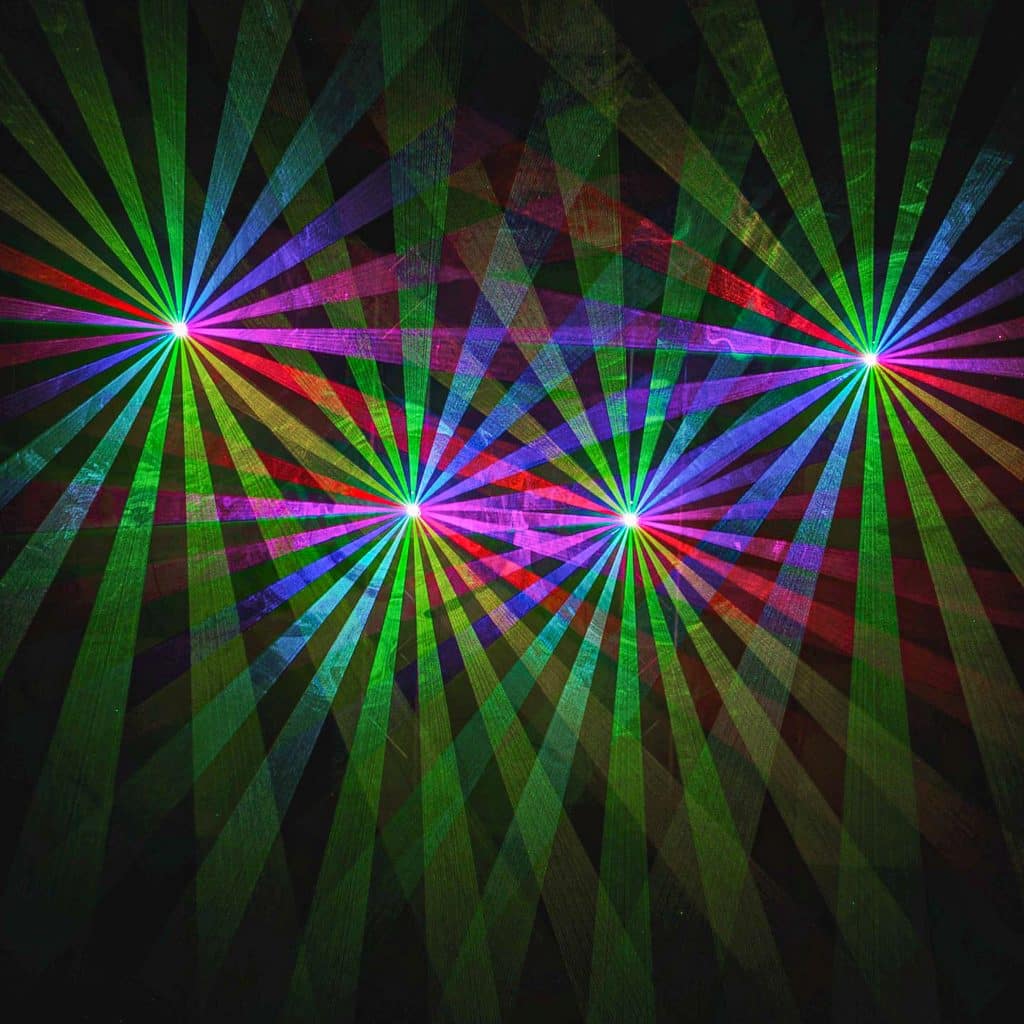
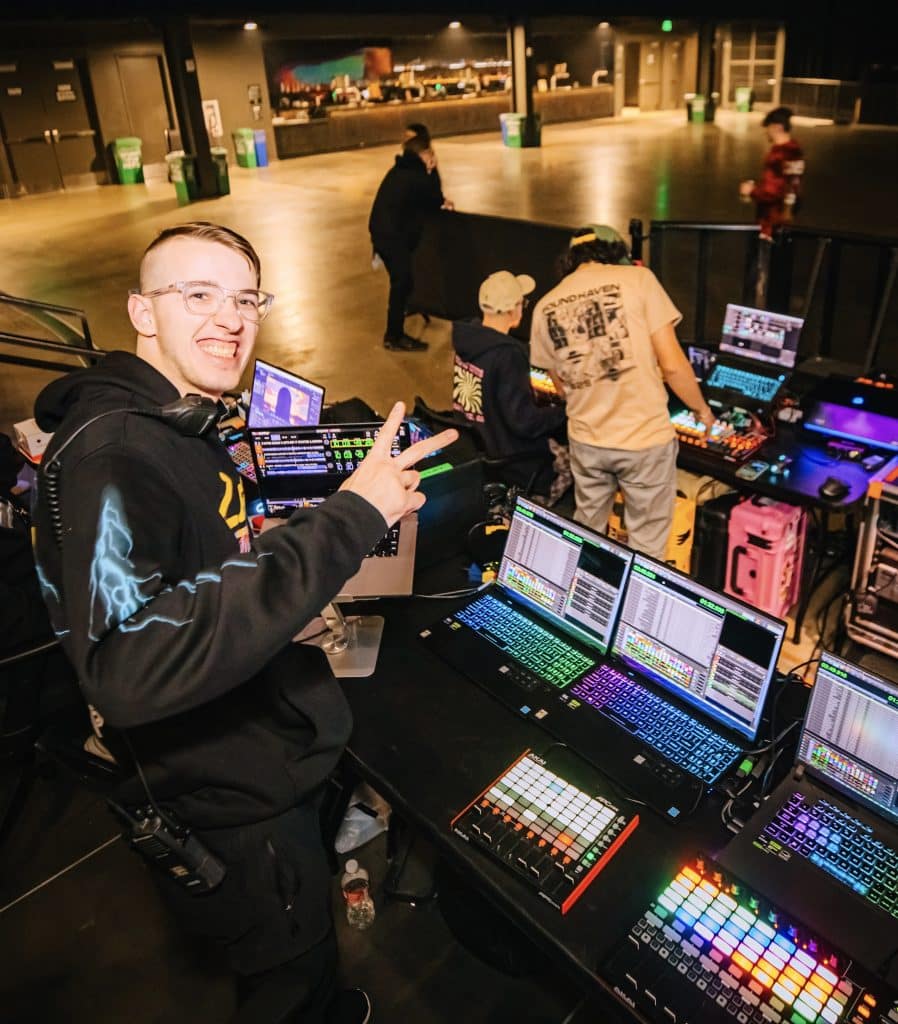
So when I’m listening to songs, I’ll listen to them a hundred times over and I will literally daydream what I imagine I want the lasers to look like. And then it’s my job to go into the software that I use, which is BEYOND, the industry standard software for laser design, and to create that vision.
My focus has always been on musicality. I don’t utilize a lot of very complex cues. I do a lot of things that are very minimal, but when utilized with the musicality — I want the music to sound like it’s painting the lasers. That’s literally the goal that I hope to achieve. I want the lasers to look like they’re being controlled by the music. Every little sound, every little nuance, every tonal shift in a bass frequency.
I want it to have a moment to impact and to shine independently from everything else that’s going on. For the longest time, I was the solo touring person with Levity. We didn’t tour with an LD or a VJ.
An LD is a lighting designer?
Yes. And a VJ does visuals. Alyssa Miller is her name. She’s our visual director for the tour. She’s an absolute beast. She works with Blanke and Ravenscoon. And then we have Owen Howell with Antic Studios. He’s our LD.
Part of my challenge for this tour has been that when I was the solo touring act, I would create a show that hits every sound, every nuance. I want the lasers to be as detailed as possible. Now we have a team, and you can build a cohesive show that lets every single production element have its moment to shine.
You can have a bass hit where it’s a strobe or a dimmer chase on the movers. And then you have the laser moments. With the show, too, we have crowd scanners, we have high-powered lasers, and we have these laser bars from Slick Lasers. So there’s so many different mediums that I can implement, but then there’s also other departments who are also insanely talented and have their creative visions as well.
You said you’ve been doing this since 2023. Walk me through the timeline.
Locally, we were doing club shows starting in July 2023 when we got our first little five-watt lasers.
In May 2024, I took my first gig as a freelancer. I started to dive into working for other companies and I took my first bus tour, which was not EDM. It was Jhené Aiko, in the world of R&B. Lots of lessons to be had as a part of that experience. And I took those things and really channeled that into what I needed to pursue.
I moved to Florida in May 2024 when I first started freelancing. I told myself I was not gonna get a day job. I had been putting in work, applying to places and companies to try to pick up more work, and then it just kind of took off. September was the turning point where I was able to work full time and not be worried about whether I could afford my bills that month.
That was when I officially took off. And it was also when I met the guys at Breakaway Mass in September 2024.
I had actually done two sets for them before this on INZO‘s bus tour, just shadowing their LD there. He let me run the lasers for it. So I knew the guys and I knew what they had to offer. Then, we actually got to meet, and I ran one of their shows for the afterparty they did. We were all so in sync. I met them after the fact, and they were like, “Dude, that was incredible. We need to keep working together.”
That was how we got started.
Have you just been working with Levity for the past year, or with other artists, too?
With EyeKandi, we do have the gear that we rent out as much as possible. Last night, we had lasers with Subtronics in Tampa. We had gear in Detroit for the GRiZMAS pre-party. So we have a number of friends, clients, artists that we’ve made over the years that we rent to.
Me personally, the artists that I’ve been working with the most this year—Levity full-time, I’m their full-time guy. I do all their shows now. I was filling in this last year with Tape B occasionally. Hunter Girand is the LD and laser guy for them. But whenever he wasn’t available, they would ask me sometimes, because we had a lot of festivals this year where I would be there with Levity and then Tape B would also be playing — but they don’t have their crew there.
Of The Trees is another one this year whom I did a couple shows with. I ran with them at Secret Dreams, Metamorphosis, Seven Stars — a handful of festivals this year. I would love to pick up more work with them. But they’ve got their crew pretty set in stone right now.
Explain for someone with no laser knowledge: What are high-powered lasers, crowd scanners, and hydra bars?
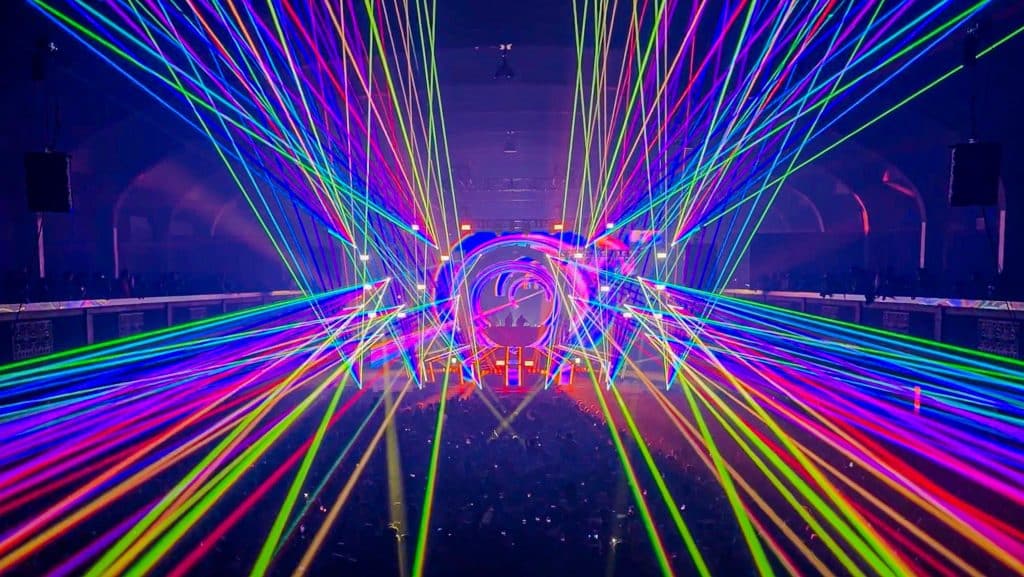
High-powered lasers are gonna be your “big and bright.” You’re usually using between 20-watt and 45 to 60-watt lasers. Think outdoor shows. Indoor shows are now starting to use high-powered units. So they’re very bright, very sharp beams. They light up the room.
Those are very regulated. They have to be terminated above people. You can’t shoot them into the crowd at all. They’re too bright. It’s called divergence — basically, how tight the beam is — and it stays very tight over a very long distance. So that’s why they’re dangerous, because that much power stays that powerful over a very long throw.
Is that why they’re always shooting up into the top of the venue or a wall?
Yeah, into the roof, to a balcony. When you’re outside, you try to find a building. When you’re outdoors, you can get FAA clearance. That’s a whole process. You have to file a form with the FAA, do all your calculations for hazard distances. They will track and see what plane flights are scheduled through that zone for the times you request, and they’ll either confirm or deny you. It’s something we deal with in the industry. It’s a tough challenge.
So that’s high powered, very bright. They’re your usual, insanely bright lasers you see on shows and you’re like, “This is fucking awesome.”
Then you have your crowd scanners. Crowd scanners are lasers that are a much lower wattage. The ones we’re using on tour are six-watt lasers. They use safety scanning. If anything were to happen that makes an unsafe output, it’ll cut the laser output immediately.
They use lenses and other proprietary features to widen the beam and shoot lasers into the crowd legally. This is very regulated. You have to have a special variance for this, which is separate from your regular laser licenses.
So actually, I said six-watt lasers, but we’re actually running those at 50% output. So we’re really only running about three watts of power total, and then you have lenses that make the beam very wide.
The audience scanners are built by “Slick” Rick Hale of Slick Lasers himself. He is incredibly smart. He’s been doing this for 25 years. He’s designed down to a science how he builds his lasers and they are some of the best crowd scanners that you can get on the market. I completely swear by him.
Any companies doing it should absolutely hire Rick.
And the hydra bar?
That is also Rick’s creation. He built it himself. They’re a laser bar fixture. Each aperture, each laser, has six watts of power, which is a lot for a tiny little fixture like it is. So it’s 36 watts total, six watts per aperture. Each aperture is independently controllable within my software.
Typically, the laser bars that are on the market right now are only DMX controlled and you don’t really have a lot of independent control of them. Especially not within BEYOND. But these laser bars each have their own control hardware, so you can control them each independently, and it is a game changer. They’re the coolest fixture I’ve ever gotten to work with. The tech behind them is insane.
Honestly, there’s not another company right now that’s doing it at the quality that he is. It’s his proprietary tech; he doesn’t sell them. He’s definitely filled a really impressive niche. So we are very honored to get to work with him on this and to have his expertise in designing this to be the perfect show.
If I’m watching LASERSHIP, which ones are which?
The high powers are gonna be terminated above everybody. It’s gonna be a pretty thin, little laser wall, maybe on the roof, maybe on the balcony.
Your crowd scanners are gonna be your full zones. You’ll see them doing all kinds of waves and spins and stuff. So you’ll see those as a fully encompassing laser.
The hydra bars are the ones that are on the ground in front of the ship.
What was the first show that ignited that fire for electronic music within you?
I would say it was probably Seven Lions. One of my favorite shows growing up was the Alchemy Tour with him, NGHTMRE, and SLANDER. The Glitch Mob: Insane lineup. I saw the show in Indiana and that was one of my first laser show experiences that really blew me away. I was like, “Wow, this is my genre. This is what I fuck with a lot. And this is really well done.”
Festival wise, it was Ubbi Dubbi 2021, the first festival back mid-pandemic. Also, Seven Lions was the first artist of the night to have laser programming. And it fucking just blew me away completely.
The whole point of me getting into this industry in the first place was being that kid, having those experiences, seeing these productions, and just being awe inspired by it. I wanted to be the one to give people that feeling. I wanted people to see my shows and get the same joy and love — and just pure euphoria — that I experienced every time I would go to a festival or show.
I’d say those first couple experiences were probably the most critical. And shout out to Garrett Gosting, who does Seven Lions and Excision, because he’s a fucking wizard. He was one of the first people who I saw doing shows like that. Actually, he was also the one who did Excision. A lot of my first shows that made me think, “Holy fuck, lasers are insane” were all done by Garrett. Which is wild.
And then, Laser Monkey is another person who I greatly attribute the start of my career to. He was the first one to actually let me shadow him on a gig. It was Peekaboo in 2020 into 2021. I was able to ask all these stupid questions as the young kid who wanted to learn this for the first time.
I would say those are the three main experiences for me that were like, “I wanna do this in some capacity. I don’t care if it’s a full-time job or not. I just wanna do this. I wanna make these experiences.”
What software do you use? I assume it’s on a Mac?
No, it’s Windows. Not a lot of people in production use Macs, honestly. Windows is better for the multi-processing capabilities that most of the software needs. For video editing and things, Mac makes the most sense. For producing, Mac makes the most sense. But for production, you’re gonna run Resolume VJ Software on Windows.
So Resolume is for video, and BEYOND is for lasers.
Yeah. You can run it on whatever, but the software is proprietary, so you’re usually gonna visualize it on Windows.
Are you basically living in these softwares, creating the parameters, and then rendering them?
Yeah. I don’t have to do any rendering. The BEYOND workflow functions like Ableton. It’s event based, like video editing software. Then you place shapes within the events, and then you place all your effects within that event as well to manipulate the shapes.
Ultimately, you’re painting shapes with lasers at the end of the day. That’s what you’re doing.
You’re outputting a shape somewhere. So you kind of have to think about it backwards a bit. When you’re designing a cue or designing a show, you’re making shapes, you’re manipulating shapes, but you have to be thinking about what the actual effects will look like in the sky, not what the shape will look like.
It’s hard to explain without showing you, honestly.
I’ve seen the end results, so I kind of understand.
We also have another software called Depence for multimedia show control and visualization. We’ve been able to live render the entire show out in a 3D CAD space, and then we’re able to connect it to BEYOND so that we can play everything out live. We just spent some time in Wisconsin doing this. We had all the files and we’re going through and designing it to the actual stage.
There’s a lot that goes on that we do that people may not realize is possible.
N: What would you say to someone on the other side of the rail watching you and thinking about wanting to be in that chair?
I was just a dude. I worked at a coffee shop. I didn’t really have a lot of big things going for me. I had some computer experience. But I was always a very musical person. I was always very creative. And I worked so hard. I made a lot of sacrifices, calling out of work, grinding as much as possible in my free time to pursue this.
The biggest thing that I could give as advice for if somebody has a dream like this: Chase that shit.
Anyone can do this. Anyone can be good at this. You just have to dedicate yourself to it. It can come naturally, but it also takes work. And within anything in the music industry, it takes hands-on experience to be good at it.
There’s no masterclass for how to exist in the music industry. You just have to figure it out. You have to go in, you have to make mistakes, you have to learn from people who have been doing this longer than you.
I’m still not even anywhere near where I aspire to be. There’s so much more that I’m learning. So much more that I’m working towards. So many bigger and better things that I’m working towards. But I’m also grateful to be where I am now. I never thought it would get this far. I really didn’t.
So don’t stop pushing, don’t stop pursuing. Also, be a good fucking person.
Half of this industry is being good at what you do. Maybe half. A lot of it is being a person that people want to be around. Be cool. Be a good person. Be confident. And always work to be better.