


Skrillex and Four Tet placed a no-phone rule at their six-hour b2b show at San Francisco’s Pier 80 Warehouse, presented by Goldenvoice and Non Plus.
During a recent chilly night in San Francisco, reputable artists Skrillex and Four Tet joined forces for one of Goldenvoice and Non Plus Ultra‘s three-day New Year’s Eve celebrations at Pier 80 Warehouse. The two gifted fans a six-hour back-to-back set inside the city’s industrial-like venue, with only one request in return: no phones.
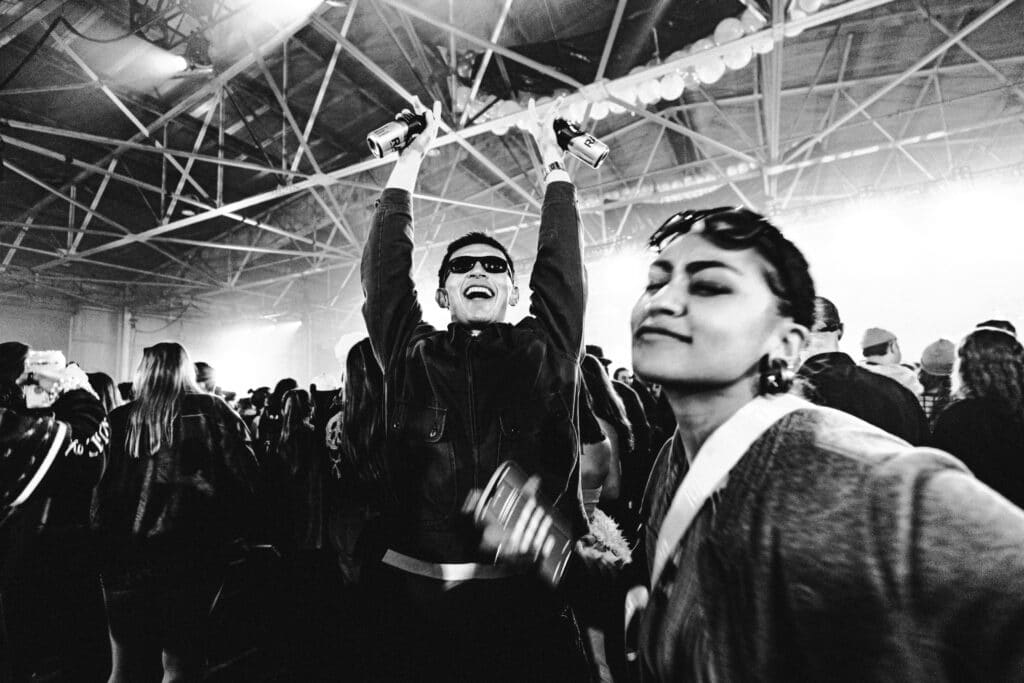
Upon entry to the warehouse, every attendee had a sticker placed over their phone’s rear-facing camera. A second sticker, for the front-facing lens, was offered, but didn’t seem required since it was just handed to us. The rule seemed simple: be present. Or, as the black and white sticker on the back of my phone read, “enjoy real life :).”
As the flock of event-goers made it through security and into the 200,000-square-foot warehouse, it became clear that keeping the sticker on wasn’t just about following a rule. It was about committing to the experience the artists wanted you to have.
With little to no phones in the air, every time I felt the urge to lift my phone, I was reminded that presence was optional, but meaningful. That small black-and-white square wasn’t just covering my camera; it was a commitment to choose attention over documentation, experience over proof.
The most obvious thing about this event was that this wasn’t a festival mainstage.
Skrillex and Four Tet played inside an unadorned industrial warehouse — one of Portola Music Festival’s stage setups — with concrete floors, exposed beams, and minimal lighting. It was evident that the music was the event, not the production. The first half of the set was essentially played under house lights, while the second half leaned into a darker ambiance. Two screens lit up against the side walls of the venue that focused solely on the two artists and their DJ equipment. A treat for those closer to the back of the room.
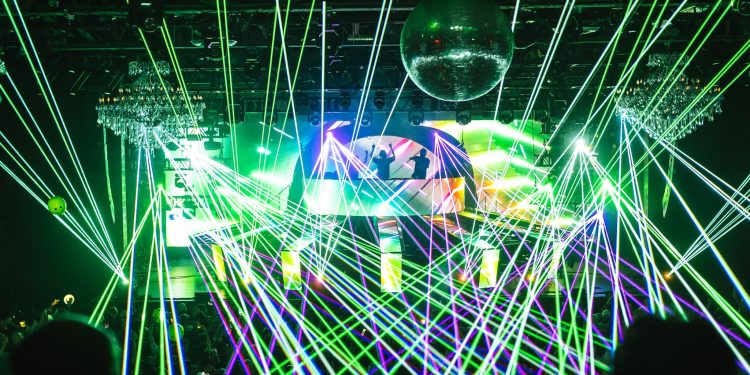
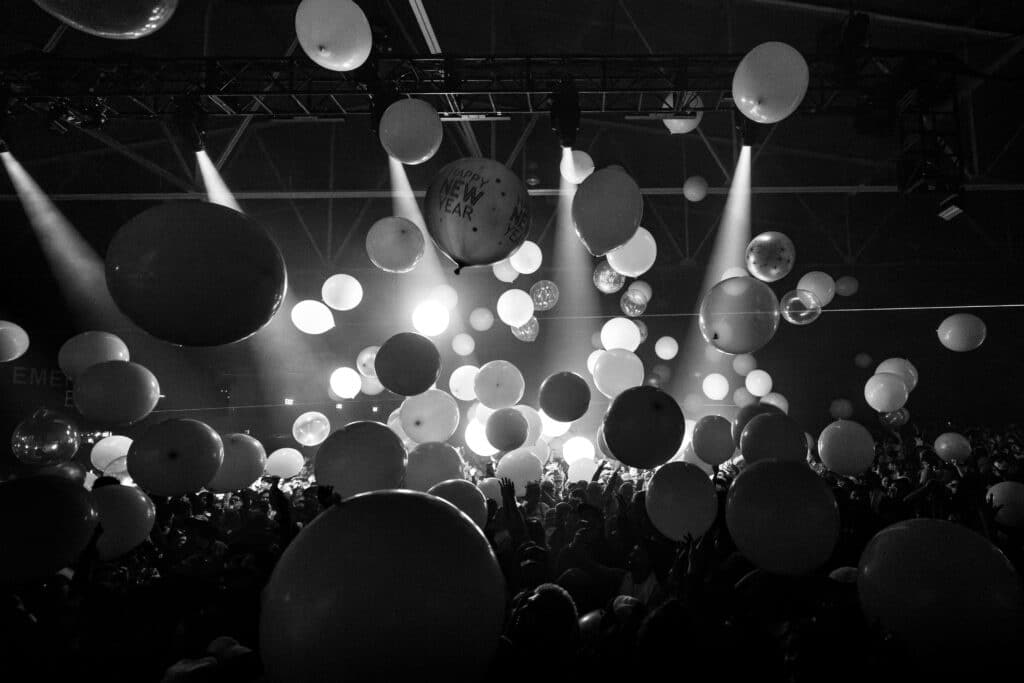
As the night was reaching an end, we were surprised by all sorts of lasers flying above our heads. On top of that, an unpredicted balloon drop was happily embraced by the crowd as the massive air-filled latex pieces fell on us. From house to ambient and breaks to dubstep, both artists showcased their artistry seamlessly through the shared set.
Of course, not everyone left their phones in their pockets.
When classic tracks like Skrillex’s “Cinema” or “Scary Monsters & Nice Sprites” dropped, phones couldn’t help but appear, some stickers came off, and cameras were live as the crowd let out whoas in unison. I admit, as a 30-year-old raver who was introduced to Skrillex at 14 through those tracks specifically, I was tempted to pull mine out too, but that’s exactly the point.
The stickers weren’t about enforcing compliance. They were a reminder of the choice we were all making. You could record, document, or pull the sticker off at any time, but the principle was to stay present. To dance without a worry to those tracks rather than stand in place and record. Being conscious of that choice made me notice more: transitions, crowd reactions, and the seamless way Four Tet and Skrillex have come to complement each other’s sound.
In practice, the no-phone policy was less about enforcement and more about self-regulation. There were no checks inside the space, no real barriers to breaking the rule. Keeping it on became a small act of participation. Removing it became a quiet opt-out from the social contract the room was attempting to build. This made being present a choice. The system in place relied not on control but on collective willingness, and that made the concept an interesting thing to witness.
Although no-phone shows are becoming more visible in the US, they aren’t entirely new.
For years, models of this concept have existed in European club culture, particularly in Berlin, Amsterdam, and parts of the UK. Photography bans and stickered cameras have long been used to protect and preserve the intimacy of dance spaces. Popular venues such as Berghain, Fabric, and Hï Ibiza are some great examples of those said clubs.
American DJ and producer Lane 8 built his This Never Happened concert series around a strict no-phones-on-the-dancefloor policy, placing tape over camera lenses and sometimes even removing guests who broke the rule to reinforce a sense of presence and connection to the music. For his USB002 tour, artist Fred again.. applied a no-phone rule by also placing stickers on the rear-facing cameras of attendees’ phones.
Artists beyond the EDM universe have experimented with similar concepts, too. From heavy metal band Ghost to singer Alicia Keys using Yondr pouches (fabric bags that secure mobile phones) to keep devices away, and producers like TSHA publicly advocating for smartphone-free dancefloors in their live sets. These initiatives echo long-standing practices that have been used to safeguard privacy and keep the focus on sound and community. It’s no surprise that a practice like this is on the rise, but can a society that relies on its phone commit to it at each show?
In the end, the no-phone policy at Skrillex’s and Four Tet’s back-to-back show didn’t necessarily create a perfect space, but it did create a meaningful one. It focused on the music and the experience, all while raising an important question: Is the need to be present on the dancefloor becoming a collective one? Only time will tell.
Follow Four Tet:
Website | X | Instagram | SoundCloud | YouTube