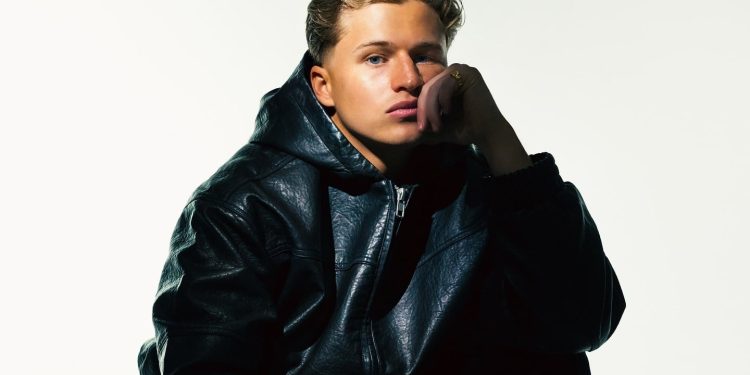



We sat down with The Bloody Beetroots to discuss his latest album, his 20-year career, and infusing electronic music with the spirit of punk rock.
Punk rock and electronic may sound worlds apart, but both share a similar history born out of underground, community-driven movements. Rooted in rebellion and resistance, each grew as a reaction against the mainstream with a focus on high energy, creative freedom, and experimentation. Those shared values continue to influence artists who bring the two genres cohesively together in lasting ways.
One of them is Italian producer and musician The Bloody Beetroots. Over two decades, he has built a prolific sonic identity championing the idea that punk rock and electronic music go hand in hand. He blends meticulous sound design with punk’s free-spirited chaos, resulting in songs that feel effortlessly dynamic yet finely detailed. His project embodies the punk rock ethos: limitless in its bounds, constantly evolving, and driven by raw energy.
We caught up with The Bloody Beetroots to discuss blending punk rock with electro, and his latest album, FOREVER PART ONE. Read on for the conversation!
Stream The Bloody Beetroots – FOREVER PART ONE on Spotify:
You’re considered a pioneer of blending punk rock and electronic music, and today, rock-electronic fusion is a big part of EDM. What is it about punk and electronic that you think blends so naturally together and continues to resonate so strongly with ravers?
From what I’ve learned over the years, punk and electronic click because they run on the same fuel: raw, clean energy, plus a healthy dose of loud-as-hell distortion. Half the time there aren’t even rules, just instinct.
When I built The Bloody Beetroots sound, I always kept respect for where punk started — basements, smoky clubs, tiny shows with barely anyone there — and dragged that energy into the electronic world. It never felt forced. It felt organic, like the only direction it could go.
And I think this blend still hits because there are artists out there digging into the past and carrying the torch forward. It’s a relay. If you handle that baton with care, dedication, and most of all honesty, the run doesn’t end — it just keeps jumping generations.
Punk and electronic music share similar roots. They both grew out of the underground, born from resistance and rebellion against mainstream establishments, and driven by raw energy and a strong sense of community. How do you carry that spirit forward in your music today?
I think that spirit is called research.
A lot of the time I ask myself where we’re at with translating punk. Did we translate it right, or are we still missing a piece? It’s that constant pressure to look again, to ask “where could this be better?” without forgetting the one thing that matters: there are no rules.
And when there are no rules, it’s easy to find a new lane: writing something fresh while still being haunted (in a good way) by the masters who came before. That spirit is a trip of nonstop research, so it becomes growth — artistically, and personally too.
Punk rock has traditionally lived outside the mainstream, but electronic music continues to grow more popular and accessible to non-ravers each year, with your music also reaching a wide global audience. How do you stay true to your roots as the electronic landscape continues to evolve?
What you’re saying is true: The Bloody Beetroots is a global project, but it speaks to a niche. Luckily, the world’s big, so that niche keeps renewing itself — generation after generation — but it’s not for everyone.
Staying loyal and authentic to my roots was a choice. And that doesn’t mean freezing the sound. It means respecting it while I evolve it — bringing innovation, kicking in doors, and breaking walls that still haven’t been broken.
Electronic music is an insane tool for decoding any genre. I use it as an excuse to translate the most punk thing possible — straight from punk’s own DNA — into my language. It’s a nasty job, but somebody’s gotta do the dirty work.
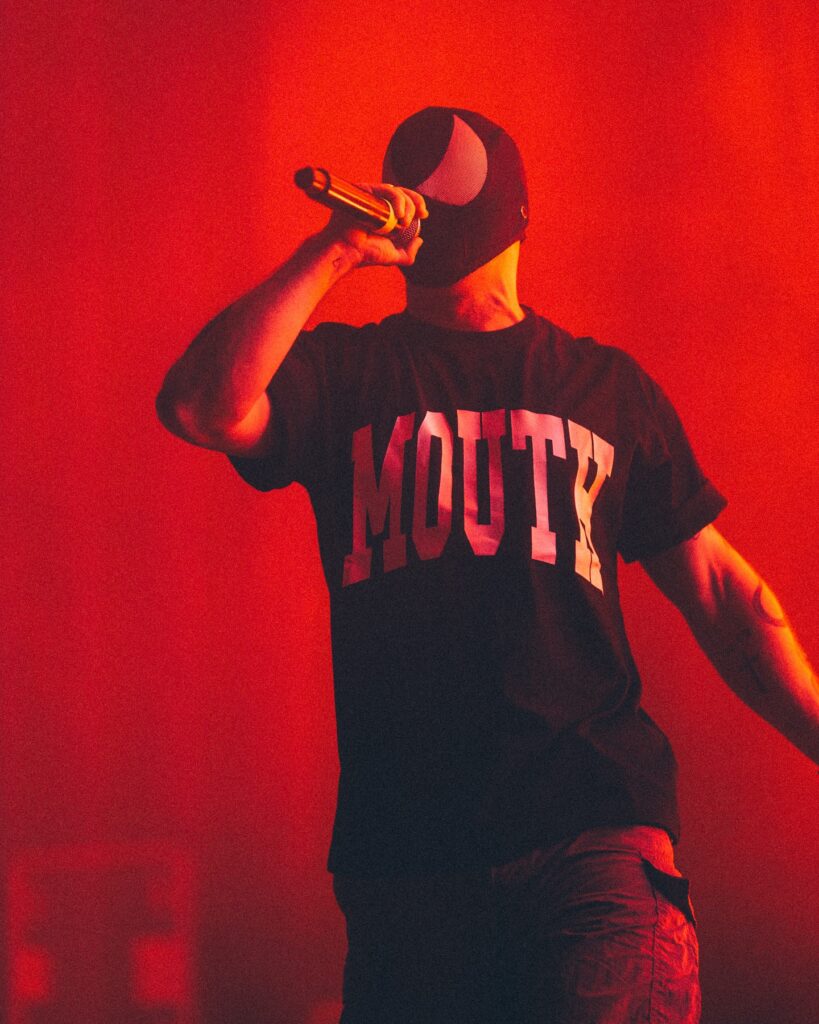
You have been making music as The Bloody Beetroots for 20 years now, and your innovative sound is constantly evolving. How does your latest album, FOREVER PART ONE, define where you are as an artist today?
FOREVER is a work of observation. I wanted to say things I couldn’t really say before — sometimes because I didn’t have the right words, sometimes because I just wasn’t there yet as an artist. Either way, this project — split in two parts — reads like a deep scan of the world The Bloody Beetroots lives in.
It pulls from a wide spectrum of influences, reconnects back to the first album, Romborama, and draws a line under the sum of everything up to now. This is the work. This is what’s been built so far.
If you listen, the direction is clear: It’s music as a whole. I use it to describe opposites colliding, because that contrast is exactly where my brain lives.
What is the story you set out to tell through this album, and what do you hope people get out of the listening experience?
I want people to listen slowly, really sit with it, and question everything. Not to prove there’s one genre an artist has to live in, but to confirm the opposite: there’s no single genre. There’s only art, and the world you build to speak through it. This is a statement of expressive freedom in a scene steered and fed by algorithms that have nothing to do with music. What I do is anti-system. It doesn’t wink at anything, and it doesn’t want to.
That’s why I want to push the listener to find their own path to freedom — because if I did it, anybody can. And this is the moment to do it. We’ve got one life. Just one. express yourself.
Can you tell us more about the creative process behind FOREVER PART ONE, from where you got your inspiration to how you went about producing the album?
My writing process is kinda’ weird, I think.
I’ve got this Moleskine [notebook] I carry everywhere — I use it to collect ideas, write down titles, and stash little stories so they don’t vanish. And if one of those notes starts ringing later, I go back, pull it out, and somehow it turns into a song, with its own title, its own identity.
The structure always happens on paper. Always.
I literally draw the timeline you’d see in a DAW like Ableton inside the Moleskine — blocks, cuts, drops, tension, release. From there, I go to the studio and I already know how it should hit, what instruments it needs, and half the time I already know who I want on it, too.
Production itself is never the hard part for me. I’m lucky; I learned to play a lot of instruments, so drum riffs or guitar ideas come out pretty naturally, pretty organically. The real challenge is the blend: how to fuse that live material with the electronic side without it feeling glued together. That part takes time, patience, and a lot of thoughts.
“I’m Not Holy” with Grabbitz taps into drum and bass, a genre often seen by fans as the rock and roll of EDM, while still fitting naturally within your punk-electronic identity. Since DnB is something you’ve only explored occasionally, what drew you to it for this track, and how does it fit into the larger scope of FOREVER PART ONE?
My thing is: I don’t sit down thinking, “I’m making a DnB track” or “I’m making a bass house track.” I think in BPM. If that tempo naturally locks with a certain electronic lane, cool, I’ll pull inspiration from it. But it’s never a genre choice. It’s a music choice.
At the end of the day, I serve the music — and it guides me.
I’m not really a “sound design for sound design’s sake” guy. I grab whatever feels functional to the bigger idea, whatever makes the song land the way it’s supposed to. And honestly, I like making songs, not just “tracks.” Tracks don’t always stick around. Even the ones people label as “Bloody Beetroots tracks” usually have musical bones that pull them back into song territory.
FOREVER PART ONE implies that there is going to be a part two to this album. Is there anything you can tell readers about the second half of the project so far?
What I can tell you is this: it’s the natural continuation of PART ONE.
Everything’s gonna click once the whole PART TWO rollout is out in the open — then you’ll be able to see it and hear it as one small, mental piece, straight from how I live and how I think.
There are some genuinely beautiful songs on PART TWO that deserve patient listening. And yeah, there’ll be a few distortion attacks that cut sharp. Tradition.
With 2025 coming to a close, what was your favorite part of this year, and is there anything in 2026 you’re particularly excited for?
2025 set the table for what we’re about to do — and announce — in 2026. A lot of festivals across the globe. A few surprises too, the kind that stamp, loud and clear, what The Bloody Beetroots really stands for. It’s getting exciting.
Follow The Bloody Beetroots:
Website | Facebook | X | Instagram | SoundCloud